What Is DOT Hazmat Training?
Simply put, DOT hazmat training is how you stay legal and safe when handling regulated materials during transport. It's not just a formality - it teaches workers what they're actually dealing with and what to do about it. The training walks you through identification, packaging, labeling, documentation, and what to do when things go sideways in an emergency. PHMSA - the Pipeline and Hazardous Materials Safety Administration, enforces all of this under Title 49 CFR 172.704. Every employer must train, test, and certify workers before they handle any hazmat task. No exceptions, no shortcuts. Done right, this training does two things: it keeps the public safe and it keeps your operation running without costly disruptions.Who Needs DOT Hazmat Training?
You'll need certification if your job involves any "hazmat employee" function. The DOT calls someone a hazmat employee when their work directly impacts hazardous materials transportation safety. This catches people who never physically handle the materials.Required Personnel
Below are the job functions that help identify who needs DOT Hazmat training:| Job Function | Who Needs Training | Examples |
| Shipping | Classifiers, packagers, labelers | Materials analysts, warehouse staff |
| Documentation | Paper preparers, manifest signers | Shipping clerks, compliance officers |
| Transportation | Drivers, loaders, handlers | CDL drivers, dock workers |
| Packaging | Manufacturers, testers, repairers | Container designers, QC inspectors |
| Supervision | Managers overseeing hazmat employees | Operations managers, team leads |
Specific job roles that require training:
- Workers who classify or research hazardous materials
- People selecting shipping descriptions or packing groups
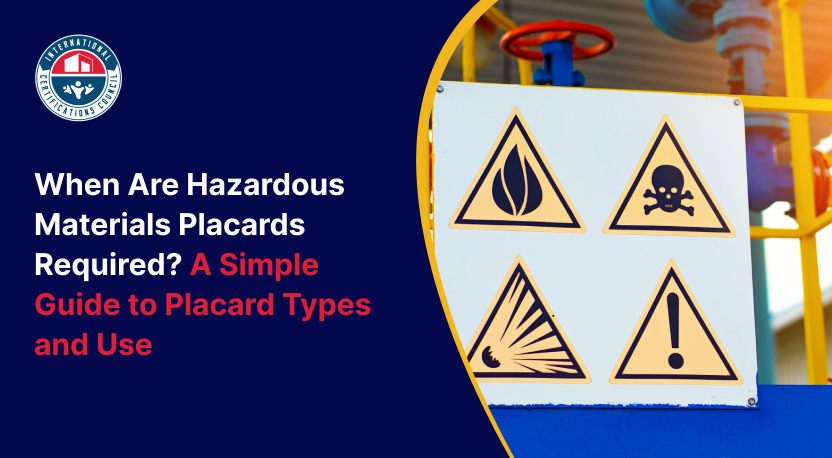
- Employees determining markings, labels, or placards
- Staff loading or unloading hazmat transport vehicles
- Personnel responding to spills, leaks, or damaged containers
- Anyone signing hazmat shipping papers or waste manifests
Four Essential Components for DOT Hazmat Training
Federal law splits training into four specific types.- General Awareness Training introduces you to the hazmat transportation system. You discover how your position connects with regulatory requirements.
- Function-Specific Training targets your exact job responsibilities under DOT regulations. This training differs based on whether you package, ship, or transport materials.
- Safety Training applies to anyone handling or getting exposed to hazmat. You pick up proper handling techniques and emergency response procedures.
- Security Awareness Training teaches threat recognition and prevention strategies. You'll understand how to protect shipments from potential terrorist activities.
Training Frequency and Compliance in DOT Hazmat Training
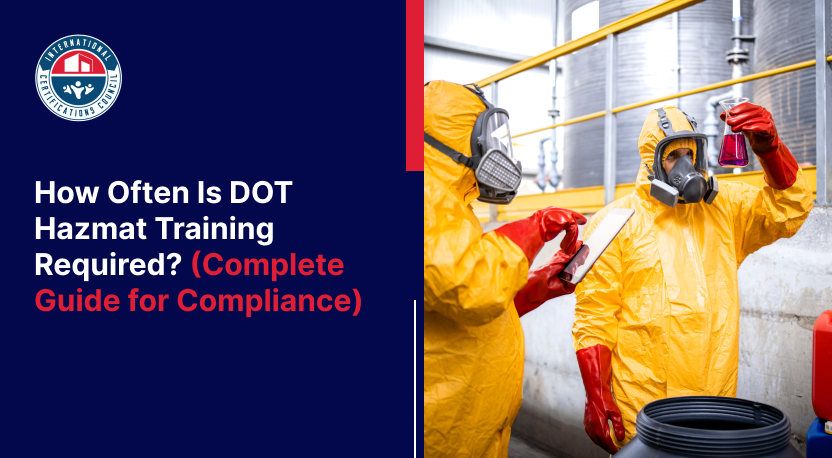
You've got to complete recurrent training every three years. The training needs to be comprehensive, not just a quick refresher. When your certification expires, you can't perform hazmat functions until you get retrained. You also need immediate retraining in these scenarios:- DOT publishes new or revised rules affecting your duties
- Your job responsibilities shift to include hazmat functions
- Your company updates its security plan (you've got 90 days)
What are the Penalties for Non-Compliance in DOT Hazmat Training?
The DOT ramped up civil penalties significantly in 2025.- Training violations carry minimum fines of $617 per employee, per day. The maximum penalty climbs to $102,348 per violation.
- Standard hazmat violations cost up to $102,348 daily. Violations causing death, injury, or property damage hit $238,809 maximum penalties per day.
Final Thoughts
If your organization is also looking for a course in DOT Hazmat training, you’ve come to the right place. ICCouncil delivers comprehensive DOT hazmat training designed specifically for transportation professionals. Our courses satisfy all PHMSA requirements under 49 CFR 172.704. You'll gain up-to-date, practical knowledge from logistics industry experts. Our training keeps your team compliant and safe. Visit ICCouncil.org to explore our certification programs.FAQs
Who needs DOT hazmat employee training?Anyone performing hazmat employee functions needs training. This includes classifiers, packagers, shippers, drivers, loaders, handlers, and supervisors involved with hazardous materials transportation.
How often must I renew DOT hazmat certification?
You've got to complete recurrent training every three years minimum. Additional training becomes necessary when regulations change or your job duties expand to include new hazmat functions.
What training components does DOT require?
DOT requires four training types: general awareness, function-specific, safety, and security awareness. High-risk shipments require additional in-depth security training per 49 CFR 172.704.
![How Often Is DOT Hazmat Training Required? [2026 Guide]](https://iccouncil.org/insights/wp-content/uploads/2026/07/How-Often-Is-DOT-Hazmat-Training-Required-2026-Guide.jpg)